
worst year ever
and the conditions of a journalist's release

Hi there,
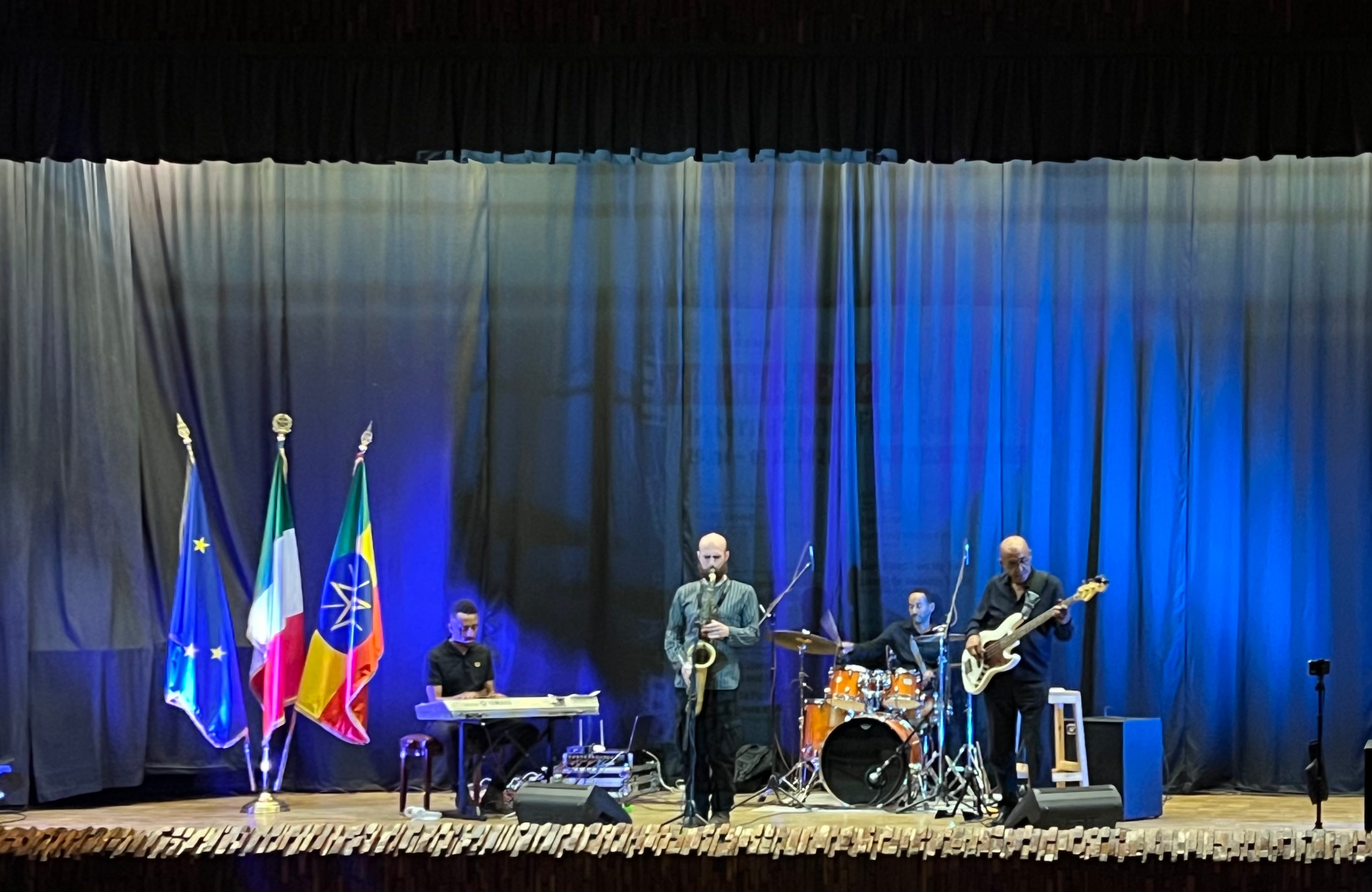
I was at the opening of the Addis International Film Festival last week, a human rights film festival. Happy to report that it was a full house on its opening night last Wednesday. I realized after sending this newsletter that I should have added a link to the festival’s IG page, and not their website, which raised more questions than it answered.
This week, on Thursday, there will be an online discussion centered on the lives of displaced women in Ethiopia’s Tigray region (following the 2020-2022 war), organized by Refugees International in collaboration with several other organisations. You can find details on that here.
My name is Maya Misikir, and I’m a freelance reporter based in Addis Abeba. I write Sifter, this newsletter where I send out the week’s top 5 human rights stories in Ethiopia.
Now, to the news.
Press freedom: “very serious”
The annual World Press Freedom Index by Reporters Without Borders (RSF) has landed, and it comes bearing bad news. For the first time since the organization started tracking press freedom (since 2002), more than half the countries on its list (180 countries) are now categorized under “difficult” or “very serious”.
Ethiopia has dropped from 145th to 148th on the list, continuing the steady downhill trajectory from 99th place in 2020. Part of the reason for this is the “abuse of national security laws”, a trend not just in authoritarian regimes but in democracies as well, according to the report.
I wrote highlights from the Annual Safety of Journalists Assessment Report 2025 from IMS back in March. Here’s an excerpt I didn’t include then:
…reporting on public-interest issues, such as corruption in investment sectors like mining, has frequently been linked to national security/interest, leading to intimidation of reporters working on these issues.
Such messages do not always come explicitly, and communications from various institutions require reading between the lines to discern them.
The report from RSF adds that this year’s abysmal conditions feature “perpetrators operating in plain sight” and “under regulated online platforms”.
The full report, from RSF, here.
Press freedom: Million is back home
Million Beyene, managing editor of local media outlet, Addis Standard, has been found. You can find details about his abduction from a couple of weeks ago, here.
Here’s an excerpt from a statement from Addis Standard:
After two weeks in undisclosed, informal detention facilities in Addis Ababa and outside the city, following his abduction from the Addis Standard newsroom, Million Beyene has been handed over this afternoon to his family…
The statement adds that further details will be communicated “as appropriate and in a manner that does not compromise” his safety.
In August last year, I wrote an update when journalists Yonas Amare (The Reporter) and Abdulsemed Mohammed (Ahadu Radio) were released after 12 days.
No updates on what happened to them during that time have been made public since.
The update from Addis Standard, here.
Tigray: keeping promises
Journalists in Ethiopia’s Tigray region are resigning from their jobs or leaving the region for fear of “being used as instruments of war”.
This “weaponization of media” follows the possibility of renewed conflict in the region, according to a new report by VoxTigray, a local civil society organization.
Here’s an excerpt:
Journalists reported being required to attend institutional orientations where they were instructed to prepare the public for “resistance.”
In one incident in March 2026, Tigray Television staff were briefed that the federal government had violated the Pretoria Agreement.
They were then instructed to disseminate messages urging the public to “organize and resist in unity.”
Harassment from the police, smear campaigns by political actors, and direct instructions on what to publish have resulted in an institutional crisis in the region, with conditions for press freedom being especially bad since early 2026, according to the report.
In September last year, officials in Ethiopia’s Tigray region announced a zero-tolerance policy to “media houses found serving the agenda of the enemy”.
The full report on VoxTigray, here.
Human rights: they never stood a chance
There are new updates on the details surrounding the execution of three Ethiopians in Saudi Arabia in April.
Before their execution on narcotics-related offenses, the three men were beaten and forced to sign documents they did not understand, according to a report by Human Rights Watch.
Here’s an excerpt from the report:
A translator appeared only in the final court hearing, solely to inform them that they had been found guilty of drug smuggling and were being sentenced to death. The sources quoted the judge as saying. “You will be an example to others.”
They also had no legal representation, adds the report, which has corroborated that at least 65 more Ethiopians are “at imminent risk of execution”.
The full report, here.
Aid: another program, and millions of lives, on the line
The Joint Emergency Operations Program in Ethiopia could be ending in June, according to a story by Devex.
What’s the Joint Emergency Operations Program? A program run by a consortium of aid agencies, once funded by USAID, which “has been delivering food and cash transfers across Ethiopia for years”.
Here’s an excerpt from the story:
“I write to inform you of a dire humanitarian food pipeline break that will take place in Ethiopia in the coming months,” Sen. Jeanne Shaheen wrote in a letter to Secretary of State Marco Rubio.
“Without the necessary funding and commodity procurement, a humanitarian catastrophe for up to 3.1 million acutely food insecure people is anticipated.”
The program was initially “expected to survive the Trump administration’s foreign aid review”.
The full story on Devex, here.
That’s all for this week. I’ll catch you next Monday.
In the meantime, if you know someone who might be interested in this, share and let them know!