
the f word
(feminist)

Hi there,
I’m finally back after a three-week break. I was on the road for some work, and I just didn’t have it in me to write this newsletter on top of everything else.
I do have some good personal news to share, though: I was one of three recipients of the 2025 Outstanding Human Rights Defender Awards from the Ethiopian Human Rights Defenders Center for my work on Sifter. That was a very cool moment, even though I almost missed the award ceremony because I had mixed up the dates.
Thanks to everyone who reads and shares this newsletter, and big shout to those of you who are always writing back, sharing feedback, and words of encouragement.
A warm welcome to all the new subscribers.
My name is Maya Misikir, and I’m a freelance reporter based in Addis Abeba. I write Sifter, this newsletter where I send out the week’s top 5 human rights stories in Ethiopia.
Now, to the news.
Tech: #KeepItOn
Access Now has released its 2025 report on internet shutdowns, and Ethiopia has emerged as a two-time offender on a list with 51 other countries.
In 2025, seven new countries joined Access Now’s running list as first-time offenders, and although there were several causes behind the shutdowns, most (40%) were triggered by conflict, including in Ethiopia.
Here’s an excerpt on this from the report:
This alarming multi-year trend highlights a landscape of conflict where perpetrators are acting with impunity while regularly cutting off internet access to conceal war crimes and atrocities and terrorize populations.
In February, I had written an update on a report about how the length of internet blackouts has a correlation to the number of conflict-related deaths. This was written with Ethiopia in mind.
One of the wins of 2025, as per the report by Access Now, is that ‘the International Criminal Court acknowledged the link between shutdowns and crimes against humanity.’
I also shared my experiences on what it’s like to work under an internet blackout for a report by the Incubator for Media Education and Development (iMEdD). You can read about my experiences along with journalists in Iran, India, Turkey, and Ukraine, in the article entitled, Reporting when the internet goes dark, here.
You can find Access Now’s 2025 report, entitled, Rising Repression Meets Global Resistance, here.
If anyone is curious to learn more about internet access and protests in Ethiopia, I highly recommend reading Elsabeth Samuel’s new book: Freedom of Expression and Social Movements in the Digital Era: A Case Study of the 2015 Oromo Protest in Ethiopia.
Women’s rights: ‘feminist’ is a slur around here
I also spoke to The Guardian for a story they covered on the online harassment and intimidation that Ethiopian women activists are facing here at home.
I’ve written about this several times in the past, most notably because my own sister, Lella Misikir, was forced to leave the country for this same reason in November 2024. Lella would be one of the first, but not the last, to be exiled for speaking up on women’s rights issues in Ethiopia.
Several months after Lella left, in August 2025, Jordin Bezabih, another women’s rights activist, left and has not returned. Her address was widely circulated before she left, with the perpetrators demanding that ‘she be found and “executed”’.
Here’s an excerpt from the story:
Three years after Facebook was accused of allowing hate speech to spread unchecked in Ethiopia, amid genocidal violence against ethnic Tigrayans during the civil war – claims rejected by Meta – social media inciters in Ethiopia have found a new target: women online.
Reports like this one are important, yet this is just the tip of the iceberg in the abuse women are facing on social media platforms. Needless to say, the abuse doesn’t stay online for long.
Other activists don’t want to be quoted in stories for fear of reprisals (as evident in this article), government institutions are not offering support or accountability mechanisms for these attacks, and the tech platforms are unresponsive.
The full article, ‘Women who speak out must be exterminated’: the rising tide of digital violence facing Ethiopian activists, on The Guardian, here.
Slopaganda: isn’t this illegal?
I wrote an update last October on how slopaganda was being used in Ethiopia to craft ‘narratives that seek to justify and legitimize Ethiopia’s aspirations to reclaim its lost sea access’. I came across the term slopaganda, which means AI-generated propaganda or synthetic propaganda, in a piece by researchers Amanuel Tesfaye and Matti Pohjonen.
A recent report by AFP shares the story (and identity) of one proud man who ‘spent most of 2026 producing AI-generated images and videos depicting Ethiopia occupying Eritrea’s strategic port of Assab.’
Here’s an excerpt from the story:
A 24-year-old law graduate with more than 87,000 Facebook followers, Eliyas told AFP that AI-generated material helps him promote what he describes as “Ethiopia’s national narrative,” including the country’s ambition to gain access to the Red Sea port of Assab, territory belonging to rival Eritrea.
Eliyas says he uses platforms like Gemini and ChatGPT to create content that counters ‘the digital warfare waged against Ethiopia’.
The relationship between Ethiopia and Eritrea is already rocky. An expert in the story says that ‘AI-driven conflict narratives have already worsened mistrust and eroded prospects for dialogue.’
The full article, on AFP, here.
Migration: a win
An international human trafficker and nine accomplices were arrested by the Ethiopian Federal Police. The gang was arrested in Ethiopia’s Tigray region, after a several-year-long investigation.
What are their alleged crimes?
Here’s an excerpt from the report on InfoMigrants:
Over nearly a decade, the criminal gang had reportedly attracted “many young people from Ethiopia, Sudan, Eritrea, Djibouti, Kenya, and Somalia” whom they would take to Libya under the pretence of aiming to help organize their onward migration to Europe.
Once the migrants found themselves stuck in Libya, the would-be migrants “were held hostage in warehouses” by the ruthless group of traffickers who, according to police statements, would demand “large sums of money” from their families — just to be spared from various methods of torture.
This recent arrest has also helped ‘Ethiopian authorities to identify more than 70 major human traffickers in Ethiopia and other countries in total.’
The full report on InfoMigrants, here.
Climate change: the great green wall
Our investigative story on the Great Green Wall is out on NPR.
What’s the Great Green Wall? A multi-billion-dollar project launched by the African Union in 2007 to build a plant “wall” across the African continent.
The intended result? Here’s an excerpt from the story:
It would re-green nearly 250 million acres of land across 11 countries from Senegal to Djibouti, and in doing so, would sequester 250 million tons of carbon, provide “green jobs” for 10 million people and alleviate poverty, food insecurity and conflict across the region.
Has it achieved any of its goals nearly ten years later?
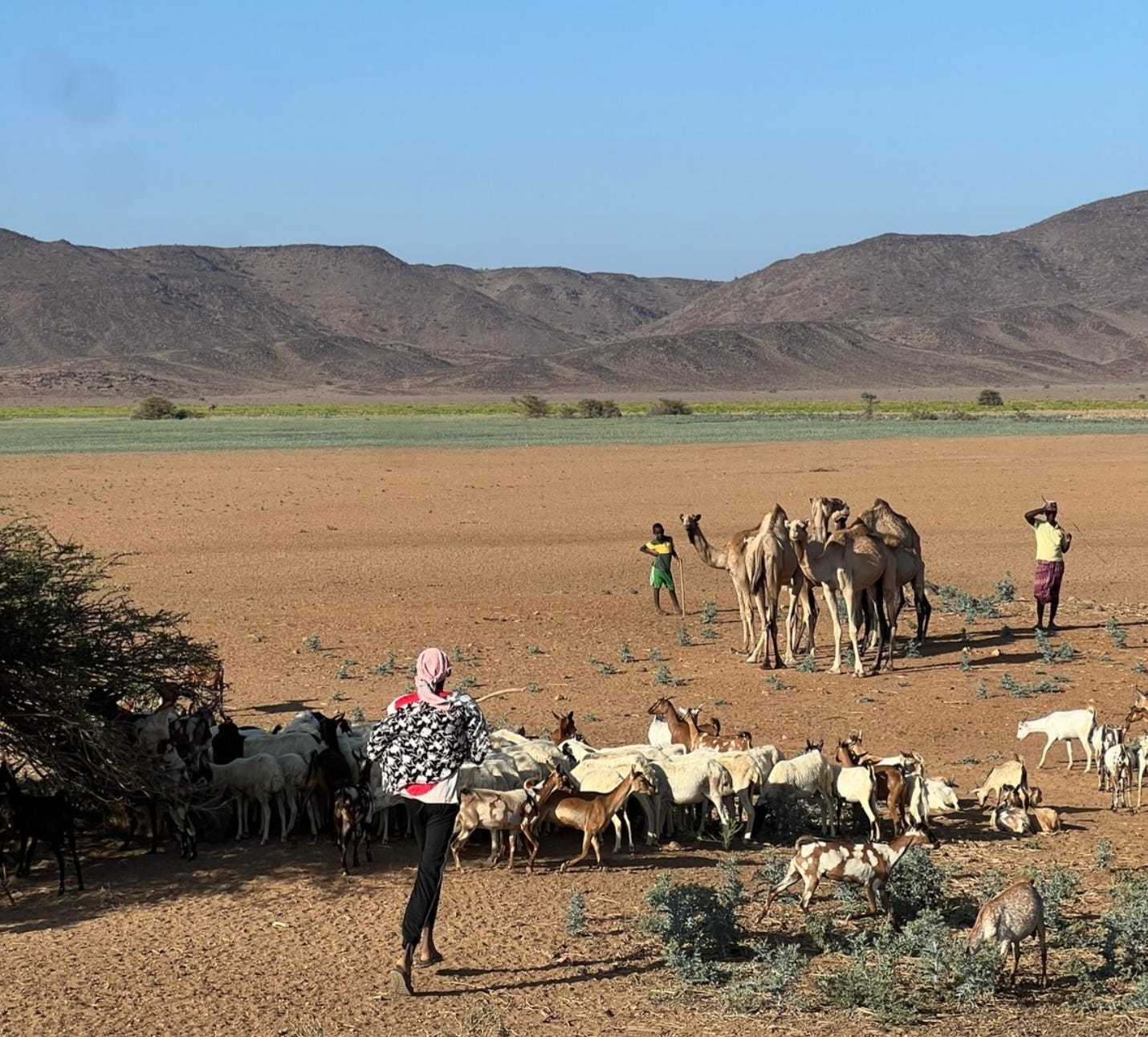
Together with two other colleagues, Julie Bourdin and Tommy Trenchard, we visited 15 project sites and spoke to community members, civil society, and government officials in Senegal, Chad, and Djibouti to find out what had happened to the billions pledged and the promises made.
The full story, on NPR, here.
That’s all for this week. I’ll catch you next Monday.
In the meantime, if you know someone who might be interested in this, share and let them know!
karibu tena my sister! missed Sifter, but glad you took time away too! thank you, My.
Maya! Congratulations for the award! You so deserve it!