
fact-checking the grapevine
and abused by their brothers in arms

Hi there,
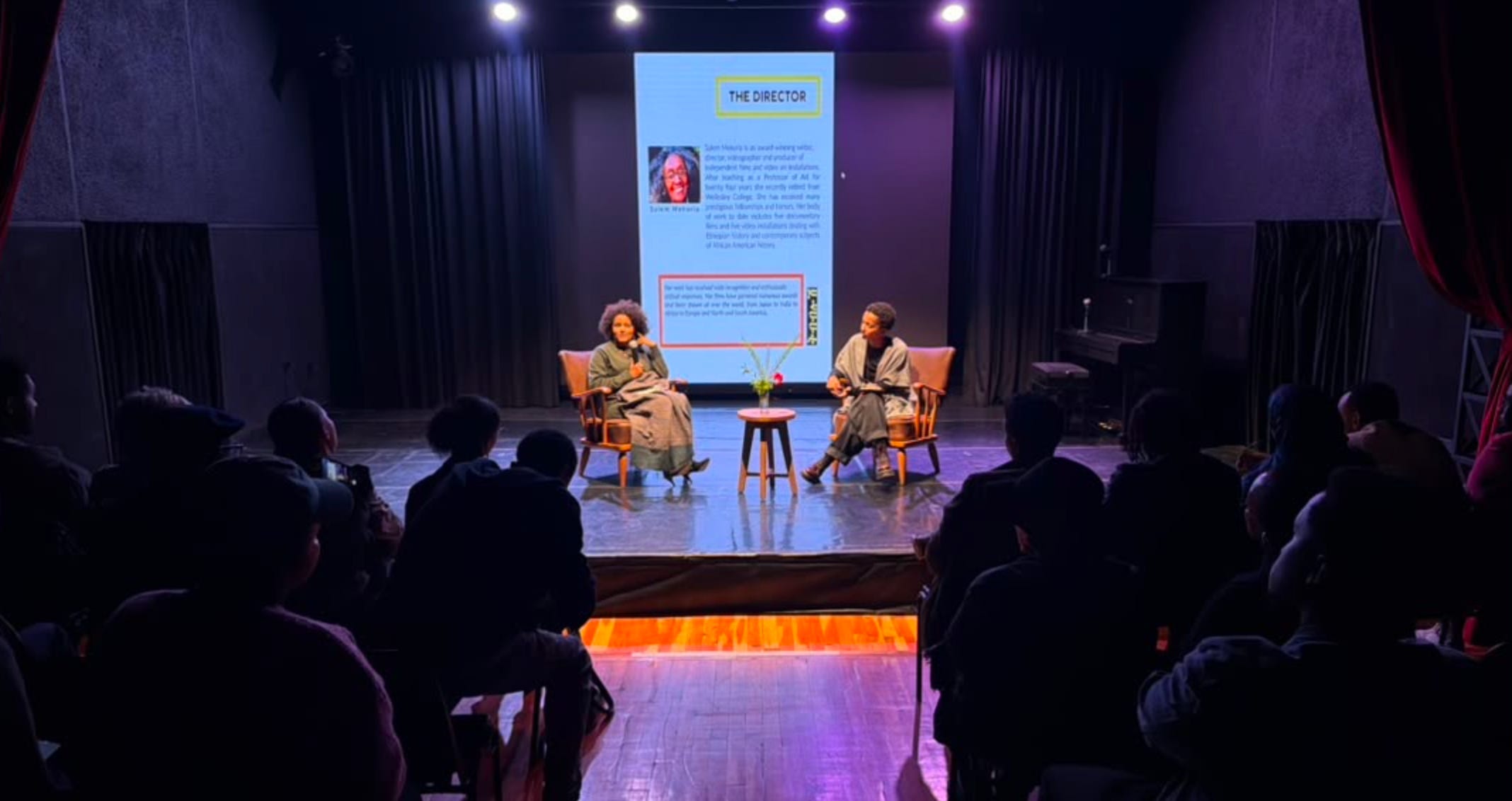
Shout out to everyone who made the time to join us last Friday at the screening of the documentary film Sidet. You can find out what films are scheduled for the coming few weeks under the Qibibilosh kiremt film screening series on their Instagram page.
My name is Maya Misikir, and I’m a freelance reporter based in Addis Abeba. I write Sifter, this newsletter where I send out the week’s top 5 human rights stories in Ethiopia.
Now, to the news.
Women’s rights: abused by their brothers in arms
Conflict-related sexual crimes in Ethiopia’s Tigray region have been documented throughout the Tigray War, and even after the peace deal was signed in November 2022.
These crimes were committed mostly by Ethiopian and Eritrean troops, as well as special forces and militia from the country’s Amhara region.
But women who were part of the Tigray Defense Forces (TDF) have also experienced sexual abuse, “at the hands of their own commanders during the 2020-2022 conflict”, according to a new investigation by The New Humanitarian.
Here’s an excerpt:
…justice for Tigrayan women also means turning a critical eye to the sexual violence committed by TDF officers against female comrades in arms – many of whom had joined the ranks looking for protection from the abuses they had witnessed.
This report includes interviews with over 20 veterans during the Tigray war, who shared testimonies on the abuses as well as the reason behind why this was kept hidden for so long: “admitting such crimes would undermine the war effort.”
The full story, on The New Humanitarian, here.
Misinformation: who will fill the vacuum?
When internet and phone lines were cut in Ethiopia’s Tigray region during the war (November 2020 - November 2022), a near-total collapse in information flow followed.
Social media was flooded with images and videos that were designed to misinform and push different agendas. These included “recycled footage from other conflicts, fabricated territorial gains, and propaganda designed to provoke fear.”
Fact-checkers at the time, few in number, were overwhelmed. They were forced to prioritize what to deal with “based on timeliness and the flammability of that topic,” explains a report published on NeimanLab.
Here’s an excerpt:
The latest reports of renewed fighting have revived concerns that the information vacuum that defined the war years could re-emerge just as quickly as the violence itself.
But while fact-checking needs to be strengthened, it cannot be the only solution. For one, fact-checkers can’t reach everyone. Far from it; only 21% of Ethiopia’s population has internet access and “rumors travel far through word of mouth.”
And even in the cases they do reach the right audience, in “highly polarized environments, corrections do not always settle disputes.”
The full report on NeimanLab, here.
Justice: harm has happened across the board
Last week I wrote an update on the start of the National Dialogue Commission’s plenary session. The Commission, established in 2021, has been facilitating discussions across the country, and has now convened 4,000 representatives in Addis Abeba to discuss the issues raised over the years.
The goal? Reach a consensus in about three weeks, and publish its recommendations.
Part of the discussions on the table include transitional justice. This dialogue can be an opportunity to relaunch this transitional justice process, according to an article published on the Institute for Security Studies.
Here’s an excerpt:
If approached strategically, the National Dialogue could inject renewed political momentum and consensus into a process that has been dormant for over a year.
The dialogue could reaffirm the legitimacy of the transitional justice process, create “national acknowledgement of harm”, and include the parliament moving forward (as the process has mostly been led by the executive, i.e., the Ministry of Justice).
What would a “national acknowledgment of harm” look like?
A recognition that “grave human rights violations have affected Ethiopians across political, ethnic and religious divides, under successive governments, and during both peace and armed conflict.”
The full report on the Institute for Security Studies, here.
Wildlife: people around conservation areas
Is the success of a conservation area only measured by how well biodiversity is protected? Or does it include the protection of the people living there as well?
In Ethiopia, protected areas (which account for 9.4% of the country’s land) have come at a cost for the communities living around these areas, according to new research published on The Conversation.
Here’s an excerpt:
Our research found that communities living within 10km of a protected area were more likely to go hungry and experience a decline in their living standards than similar households elsewhere.
How did the researchers reach this conclusion?
They surveyed more than 3,000 households and compared “communities that were alike in almost every way, except that one was close to a protected area and the other was not.”
So, what does this entail for the “global push to conserve 30% of the planet by 2030”?
The full story on The Conversation, here.
Tigray: protesting forced conscriptions
The reports of forced conscriptions in Ethiopia’s Tigray region have made headlines over the past several weeks.
Last week, representatives from Tigray’s opposition political parties organized a rally in Addis Abeba calling for an end to the conscriptions.
Here’s an excerpt from a story on Addis Standard:
Hundreds of people gathered at Meskel Square in Addis Abeba today in a demonstration organized by the Tigray Peace and Change Council, calling for an end to what participants described as forced recruitment in Tigray, the full implementation of the Pretoria Cessation of Hostilities Agreement, and the return of internally displaced persons to their homes.
Over the same week, in Tigray, “security forces initially attempted to disperse the crowd before beating several women” who were demanding the release of their children after they were forcibly recruited, according to an update on Wegahta Facts.
The full story on Addis Standard here, and on Wegahta Facts, here.
That’s all for this week. I’ll catch you next Monday.
In the meantime, if you know someone who might be interested in this, share and let them know!